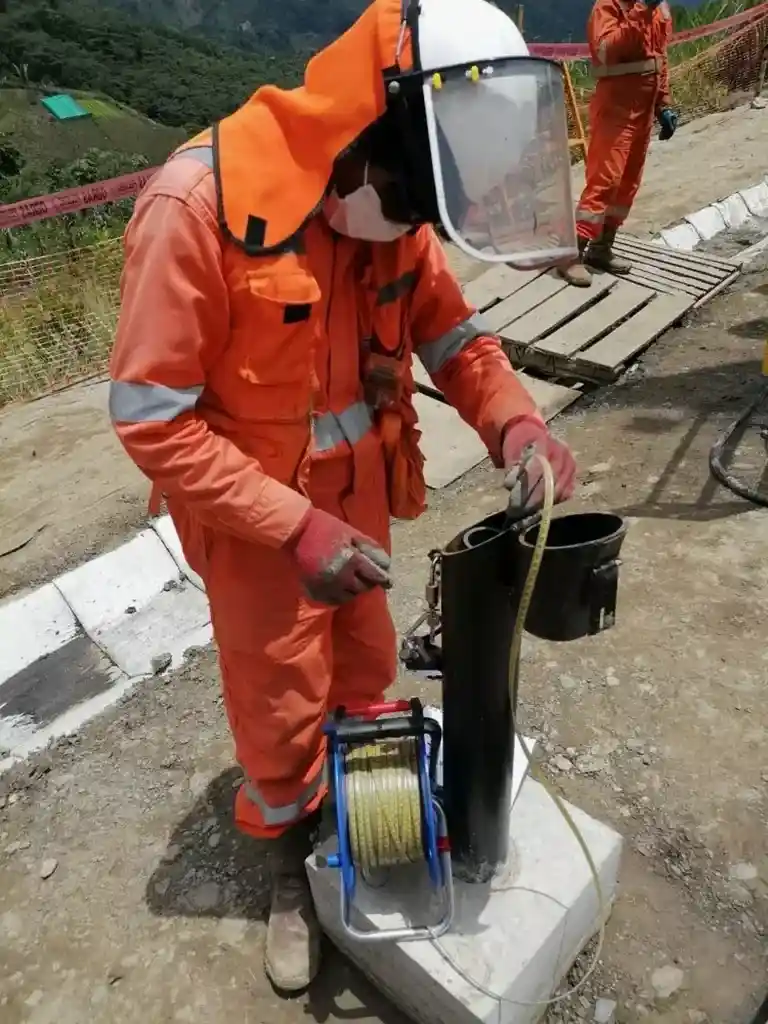
Roadway engineering in Saguenay encompasses the comprehensive planning, design, and structural evaluation of pavement systems to support safe and durable transportation networks. This category addresses the full lifecycle of road infrastructure, from subgrade assessment to surface layer specification, ensuring that both flexible and rigid pavements meet the demands of local traffic loads and environmental stresses. In a region characterized by expansive industrial activity and vital residential connectivity, the integrity of roadway structures is fundamental to economic continuity and public safety. technicians in this field apply advanced geotechnical and materials engineering principles to deliver roads that resist deformation, cracking, and premature failure.
The unique geological context of Saguenay, shaped by the Saguenay Graben and widespread marine clay deposits, presents significant challenges for roadway construction. Much of the area is underlain by sensitive Laflamme Sea clays, which are prone to remolding and settlement when disturbed, requiring meticulous subgrade preparation and drainage considerations. The region also experiences severe freeze-thaw cycles typical of a humid continental climate, with frost penetration depths that can exceed 2.5 meters. These conditions necessitate robust flexible pavement design strategies that incorporate thick granular bases to mitigate frost heave and prevent the propagation of reflective cracking through asphalt layers.
Regulatory compliance for roadway projects in Saguenay is governed by provincial standards, primarily the Normes – Ouvrages routiers published by the Ministère des Transports et de la Mobilité durable du Québec (MTMD). These standards dictate material specifications, compaction requirements, and structural design methodologies, including the empirical AASHTO 1993 guide adapted for Quebec’s climatic zones. For concrete pavements, adherence to MTMD’s Tome VII – Matériaux is mandatory, ensuring that rigid pavement design meets performance criteria for joint durability and load transfer efficiency. Municipal bylaws in Saguenay may also impose additional environmental constraints related to stormwater management and aggregate sourcing.
The scope of this category is critical for a diverse range of projects, including the rehabilitation of arterial routes like Boulevard Talbot, the expansion of industrial access roads in the Jonquière sector, and the construction of new residential subdivisions on the city’s outskirts. Before any pavement structure is dimensioned, a thorough geotechnical investigation is essential, often starting with a CBR study for road design to quantify the bearing capacity of the native soil. This empirical value directly influences the required thickness of base and sub-base layers, forming the foundation of a cost-effective and resilient roadway system that can withstand heavy truck traffic from the region’s aluminum and forestry industries.
Flexible pavements, typically asphalt, distribute loads through a layered granular system to the subgrade and are more forgiving of differential frost heave, making them common in Saguenay’s residential and arterial roads. Rigid pavements, made of Portland cement concrete, rely on the slab’s structural stiffness to spread loads and are preferred for high-traffic industrial corridors and intersections due to their durability against heavy static loads and resistance to deformation from aluminum truck traffic.
The sensitive Laflamme Sea clays can lose significant shear strength when disturbed or saturated, leading to differential settlement and pavement rutting. To mitigate this, roadway designs often require preloading, vertical drains, or deep soil mixing to stabilize the subgrade. Without proper geotechnical intervention, these clays can cause premature fatigue cracking and structural failure, especially during spring thaw when excess pore water pressure peaks.
The Normes – Ouvrages routiers from the MTMD form the primary regulatory framework, detailing design traffic loads, material gradation bands, and layer thickness design tables adapted for Quebec’s climate. These standards are supplemented by the Guide de conception des chaussées and require all materials to meet specific BNQ (Bureau de normalisation du Québec) certification to ensure resistance to thermal cracking and stripping in the region’s severe freeze-thaw environment.
A geotechnical investigation, including boreholes and laboratory testing, identifies the variability in soil stratigraphy, groundwater levels, and the presence of sensitive clays or potential frost-susceptible silts. This data is essential for calculating the California Bearing Ratio (CBR) and modulus of subgrade reaction, which directly inform pavement thickness design. Skipping this step can lead to under-designed road sections that rut and crack prematurely under Saguenay’s heavy industrial loads and harsh winter conditions.
We serve projects across Saguenay and its metropolitan area.