Together, we solve the challenges of tomorrow.
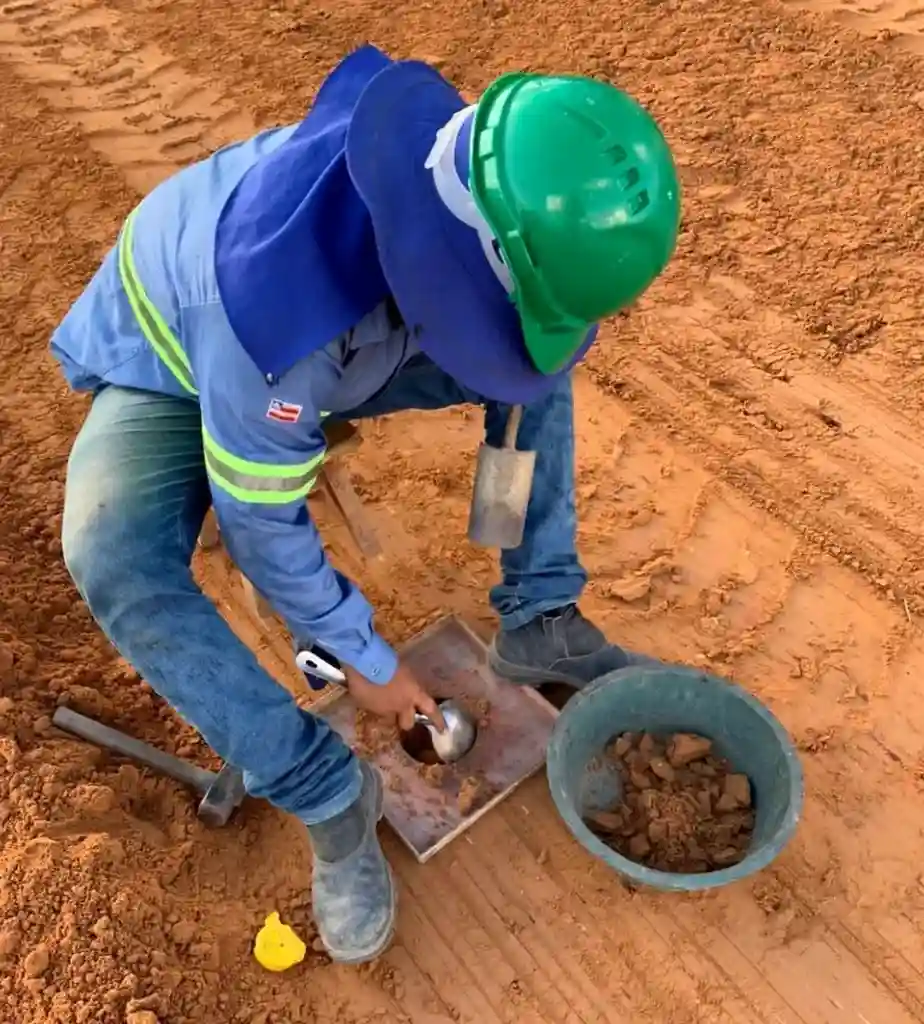
LEARN MORE →In-situ testing forms the backbone of reliable geotechnical site characterization in Saguenay, providing engineers with direct measurements of soil and rock properties without the disturbance inherent in laboratory sampling. This category encompasses field procedures designed to evaluate density, bearing capacity, permeability, and deformation behavior under actual ground conditions. For projects across the Saguenay–Lac-Saint-Jean region, from Jonquière to Chicoutimi, these tests are indispensable for validating design assumptions and mitigating risks associated with variable subsurface materials. A comprehensive in-situ campaign typically integrates multiple methods, such as the field density test (sand cone method) for compaction control and the plate load test (PLT) for foundation bearing verification, ensuring that earthworks and structural footings meet performance specifications.
Saguenay's geology presents a complex mosaic shaped by glacial and post-glacial processes, demanding a nuanced approach to site investigation. Much of the urbanized corridor is underlain by thick sequences of marine clay deposited by the Laflamme Sea, which are notoriously sensitive and prone to retrogressive landslides. These Champlain Sea clays often coexist with glaciofluvial sands and gravels, as well as till deposits of variable density. Bedrock, primarily granitic gneiss of the Canadian Shield, outcrops on the region's higher slopes and underlies the overburden at depths that can shift abruptly. In such a heterogeneous environment, laboratory tests alone cannot capture the true in-situ state of stress, fabric, or hydraulic regime, making field permeability tests (Lefranc/Lugeon) critical for understanding groundwater flow through both soil and fractured rock.
Geotechnical practice in Quebec is governed by the provincial Code de construction, which mandates adherence to CAN/BNQ 2501-070 for soil sampling and in-situ testing, alongside national standards from the Canadian Standards Association (CSA) and the Bureau de normalisation du Québec (BNQ). Test procedures align with ASTM International standards, including ASTM D1556 for the sand cone density method and ASTM D1194 for plate load tests. For permeability assessments, the Lefranc test follows the guidelines of the Canadian Foundation Engineering Manual (CFEM), while Lugeon testing in rock conforms to ISRM suggested methods. Contractors and consultants operating in Saguenay must also respect municipal bylaws that often require site-specific bearing capacity verification via PLT for any structure exceeding three storeys on clay-rich terrain.
The diversity of development in Saguenay—from heavy industrial expansions at the Rio Tinto aluminum complex to residential subdivisions on sloping clay deposits—drives demand for a wide spectrum of in-situ tests. Transportation infrastructure projects, including upgrades to Route 175 and the Chicoutimi airport, rely on rigorous compaction verification using nuclear or sand cone density methods. Commercial buildings and institutional facilities on sensitive clays frequently necessitate plate load testing to confirm allowable bearing pressures before foundation construction. Meanwhile, hydroelectric developments and water supply projects in the surrounding Precambrian highlands depend on Lugeon permeability profiling to assess grouting needs and seepage potential. Each test type addresses a specific design question, and their strategic combination, guided by an experienced geotechnical engineer, forms the foundation of a defensible and cost-effective investigation.
In-situ testing evaluates soil and rock in their natural state, preserving stress history, structure, and moisture conditions that are inevitably altered during sampling and transport. In Saguenay's sensitive marine clays, disturbance can reduce undrained shear strength by over 50 percent. Field methods like the field vane or pressuremeter capture the true fabric and pore pressure regime, providing parameters that directly reflect ground behavior without correction factors.
While no single test is universally mandatory, municipal regulations and the Quebec Construction Code typically require a combination of cone penetration testing (CPT) with pore pressure measurement and field vane tests to characterize Champlain Sea clay sensitivity. For foundation design, plate load tests are often specified to verify allowable bearing capacity. The exact suite depends on the building's importance category and the site's risk classification.
Investigation depth depends on the method and the local geology. Standard penetration tests and CPT soundings routinely reach 20 to 30 meters in Saguenay's clay basins, sufficient to penetrate the full thickness of marine deposits. Lugeon permeability tests in bedrock can be conducted in boreholes extending 100 meters or more, particularly for hydroelectric projects. The limit is governed by equipment capacity and the presence of boulder-rich till.
Winter conditions from December through March can freeze the upper one to two meters of soil, complicating access for plate load tests and shallow density assessments. Permafrost is absent, but frost penetration requires pre-drilling or heated enclosures for some methods. Spring thaw creates soft, saturated ground that limits heavy equipment mobility. Most contractors schedule intensive field campaigns between May and October to ensure reliable data and safe working conditions.
We serve projects across Saguenay and its metropolitan area.