Together, we solve the challenges of tomorrow.
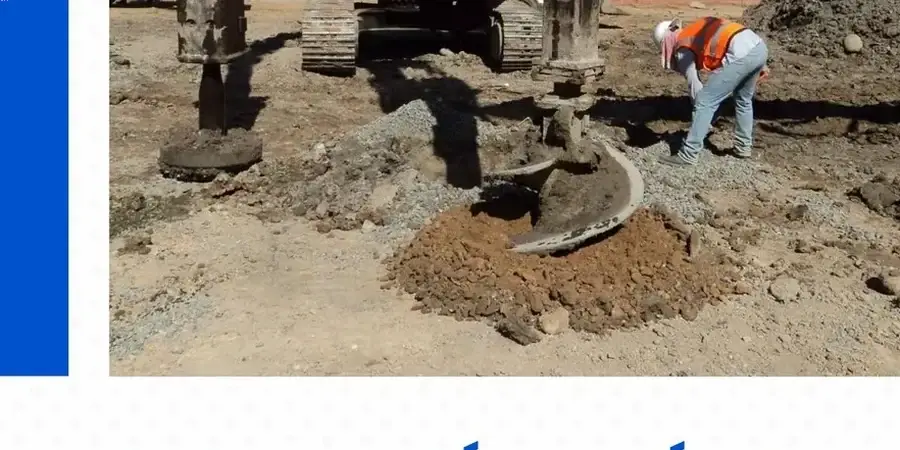
LEARN MORE →Ground improvement in Saguenay encompasses a suite of geotechnical techniques designed to enhance the load-bearing capacity, reduce settlement, and mitigate seismic risks of the region's challenging native soils. This category is critical for ensuring the long-term stability of infrastructure in an area where thick deposits of soft, compressible marine clays—specifically the Laflamme Sea clays—dominate the subsurface profile. Without proper treatment, these sensitive clays can undergo significant volume changes and even flow liquefaction, posing serious risks to buildings, road embankments, and industrial facilities. Our comprehensive approach to ground improvement addresses these hazards through rigorous site investigation, advanced design, and specialized execution methods tailored to the Saguenay–Lac-Saint-Jean geological context.
The local geology is defined by post-glacial sedimentation that left behind deep sequences of silty clay with high water content and pronounced sensitivity. These soils can lose more than 90% of their undisturbed strength when remolded, making traditional shallow foundations inadequate for all but the lightest structures. Additionally, parts of Saguenay are located within a seismically active zone, notably influenced by the Charlevoix Seismic Zone, which demands that ground improvement solutions also account for dynamic loading and potential cyclic softening. The combination of soft clays overlying glacial till or bedrock at variable depths creates a complex geotechnical environment where treatment depths must be carefully calibrated to reach competent bearing strata.
Canadian geotechnical practice in this domain is governed by the National Building Code of Canada (NBCC), with detailed methodology outlined in stone column design standards and the Canadian Foundation Engineering Manual (CFEM). For deep mixing or rigid inclusion applications, practitioners refer to CSA S807 for fibre-reinforced polymer bars and relevant ASTM standards for material testing. In Quebec, the Bureau de normalisation du Québec (BNQ) provides additional guidance on soil characterization and quality control. All designs must conform to the provincial Engineers Act, ensuring that ground improvement strategies are stamped by a professional engineer licensed by the Ordre des ingénieurs du Québec (OIQ), with a thorough understanding of the region's unique geohazards.
This category of work is essential for a wide range of projects across Saguenay, from the expansion of port facilities along the Saguenay River to the construction of commercial complexes and residential subdivisions on the city's plateaus. Heavy industrial developments, such as aluminum smelters and pulp and paper mills, routinely require ground improvement to support large storage tanks, crane pads, and vibration-sensitive machinery. Transportation infrastructure, including highway overpasses and railway embankments, also benefits from these techniques to prevent differential settlement and maintain grade. For sites where excavation and replacement are impractical due to depth or environmental constraints, in-situ treatments like the installation of stone column design systems offer a cost-effective and reliable alternative, reinforcing the soil mass through densification and drainage.
Vibro-replacement with stone columns is highly effective for Saguenay's sensitive Laflamme Sea clays, as it densifies the surrounding soil and provides drainage paths to accelerate consolidation. Deep soil mixing and rigid inclusions are also suitable, particularly for structures requiring strict settlement control. The choice depends on the clay's sensitivity, depth to bedrock, and the project's load requirements.
Proximity to the Charlevoix Seismic Zone requires designs to account for potential cyclic loading and liquefaction of soft soils. Ground improvement designs must evaluate the reduction in cyclic shear stress and increased soil stiffness. Stone columns, for example, mitigate liquefaction risk by densifying the soil and providing pore pressure relief, which is critical for maintaining stability during a seismic event.
A thorough investigation must include cone penetration tests with pore pressure measurement to map the extent and sensitivity of the clay layers. Scattered vane tests are essential to measure undrained shear strength in situ. Sampling for laboratory consolidation and triaxial testing helps determine settlement parameters and strength gain during treatment, following BNQ and ASTM standards.
Quality control is governed by the NBCC and the CFEM, with specific testing per ASTM and CSA standards. For stone columns, modulus load tests and post-installation CPTs verify densification. In Quebec, the OIQ requires that a professional engineer supervise and document all testing phases to ensure the improved ground meets the design intent and performance criteria.
We serve projects across Saguenay and its metropolitan area.